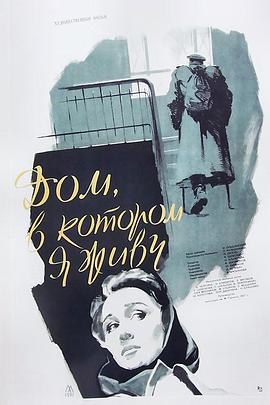
和大多数聚焦前线冲锋或统帅部决策的战争片不同,《我住的房子》把镜头钉死在莫斯科一栋普通公寓楼里。导演用白描手法定格这些瞬间,没有煽情音乐,只有壁炉里木柴的噼啪声。瓦莲京娜·特列吉娜饰演的女邻居尤其动人,她送丈夫上前线时没有一句台词,只用手快速抹了抹围裙,那个动作比任何哭喊都沉重。 ★。 剧情推进像剥洋葱,用邻里间的闲谈、孩子的游戏、墙上的弹孔来拼凑战争的另一面。
 ☆。
They do not show war in this film, they show people and their dreams and hopes ruined by the war. It is not just another "war film", but it rises to the level of a true Tragedy. Not a propagandist or a sob story. Many critics compare this film to another famous Russian war drama, The Cranes Are Flying. I still think that The House I Live in is better, though, if you've seen The Cranes and liked it, most probably you'll love this one either. Both films were shot in 1957 and treat the war theme from the similar humane perspective. I wouldn't cut a single shot from the film, all of them are just in place. I do not know if it can be found outside Russia, if yes, don't miss it.
Many critics pointed out resemblances between Dom, V Kotorom Ya Zhivu (The House I Live In) and the better-known Soviet film The Cranes are Flying. Set in the years prior to and during WWII, the story centers on the various residents of a co-op house. Though the directors never show the war itself, its tragic impact is felt throughout the film. And despite the potential for Soviet propaganda, what sticks in the mind is the universality of the experiences endured by the leading characters. Dom, V Kotorom Ya Zhivu was one of Russian's entries in the 1958 Brussels Film Festival.
相关搜索:
六十年代的房子六七十年代的住房沉重的1957我住的房子像什么50年代农村老房子